
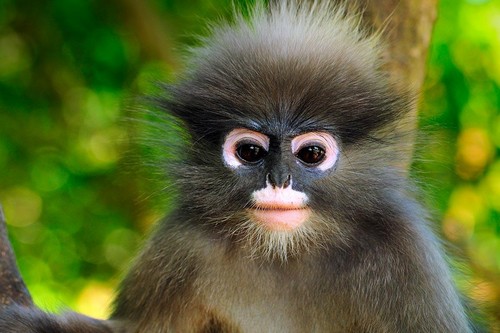
MONKEY
As apes have emerged in the monkey group as sister of the old world monkeys, characteristics that describe monkeys are generally shared by apes as well. Williams et al outlined evolutionary features, including in stem groupings, contrasted against the other primates such as the tarsiers and the lemuriformes.
Monkeys range in size from the pygmy marmoset, which can be as small as 117 millimetres (4.6 in) with a 172-millimetre (6.8 in) tail and just over 100 grams (3.5 oz) in weight,[33] to the male mandrill, almost 1 metre (3.3 ft) long and weighing up to 36 kilograms (79 lb).[34] Some are arboreal (living in trees) while others live on the savanna; diets differ among the various species but may contain any of the following: fruit, leaves, seeds, nuts, flowers, eggs and small animals (including insects and spiders)
Simians and tarsiers, the two members of the suborder Haplorhini, emerged some 60 million years ago. New World monkeys and catarrhine monkeys emerged within the simians some 35 million years ago. Old World monkeys and apes emerged within the catarrhine monkeys some 25 million years ago. Extinct basal simians such as Aegyptopithecus or Parapithecus [35–32 million years ago] are also considered monkeys by primatologists.
WHERE WILL YOU FIND THEM
You will find them in the treees near the giraffes.